How AI Decides When to Recommend Your Urgent Care
January 25, 2026People are starting to use AI tools for things they used to use Google for, and often they chat with AI using the same type of questions they would ask Google.
For example, they may use short, vague prompts like:
- Where is the best urgent care near me?
- Where should I get pizza nearby?
- Is there a hardware store near me open now?
And, they expect the system to know where they are, what they mean by near, and what matters most in that moment.
Google Maps knows these things, so people assume that ChatGPT or Gemini do also. If you aren’t paying attention, you may not even notice. But it turns out, you can’t assume AI knows the things that Google Maps does about you.
This gap between expectation and reality affects both users and local businesses. Understanding it matters for everyone.
The core mismatch
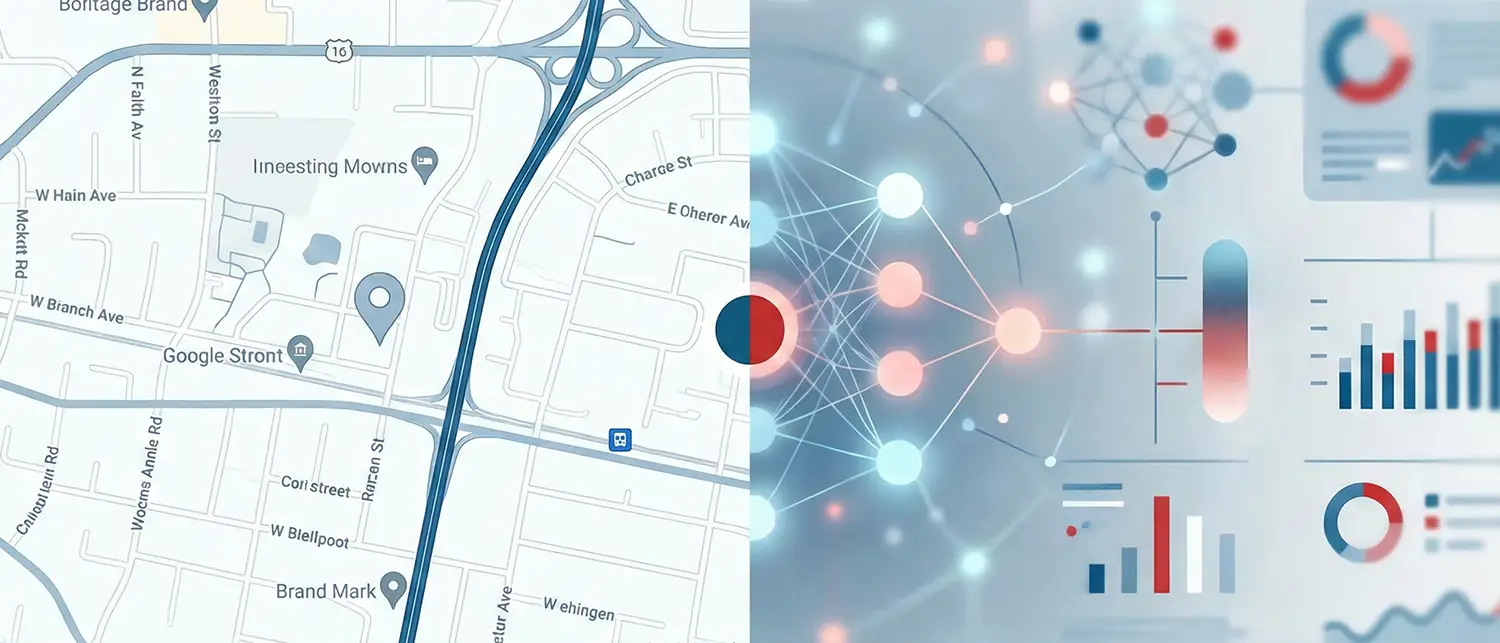
Google Maps is proximity-first. AI tools are reasoning-first.
Google answers questions like: Where is the closest option right now?
AI answers questions like: What seems to fit this request, given the information provided?
Those are fundamentally different jobs.
When users do not provide constraints, AI fills in the gaps using random assumptions which may or may not be true. That is where confusion begins.
What actually happens when users search locally in AI
When someone asks an AI tool for something near them, they usually do not:
- specify their exact location
- define near in distance or time
- state urgency or access requirements or constaints
In response, unless you ask it to ask clarifying questions, AI tools make inferences. These often favor:
- Well-known brands
- Large systems
- Businesses with clear, frequently repeated descriptions
- Examples that sound reasonable in a general sense
The answer may sound confident and helpful, while being poorly matched to the user’s real situation.
Why this matters for users
From the user’s perspective, the differences may or may not be obvious.
They may assume:
- Near means nearby
- Open now means verified
- The first answer is the best answer
Based on these assumptions, AI answers are often far from optimal.
When location, time, or convenience truly matter, you may want to stick with Google Maps – or at least double check your AI results.
Why this matters for an urgent care or occupational medicine practice
For urgent care and occupational medicine practices, the gap between Google-style search and AI-style search creates very specific risks.
AI may not surface your practice in situations where Google Maps would. At the same time, it may surface your practice:
- To patients or employers who are outside your realistic service area
- To people whose needs do not match how your clinic actually operates
- In moments when you are not open, not walk-in, or not equipped to help
That creates friction for patients, employers, and staff.
Being mentioned by AI is not always a win if the context is wrong.
The practical recommendation
At this point, the implication for urgent care and occupational medicine practices should be clear.
AI will speak for your practice whether you intend it to or not.
Your responsibility is to make sure it can clearly understand:
- your geographic boundaries
- the types of patients or employers you are built to serve
- when you are the right option and when you are not
When those boundaries are explicit in your public-facing language, AI is far more likely to feature your practice in the situations you are actually prepared to handle.
© 2026 WebForDoctors | Payment Processing | Privacy Policy