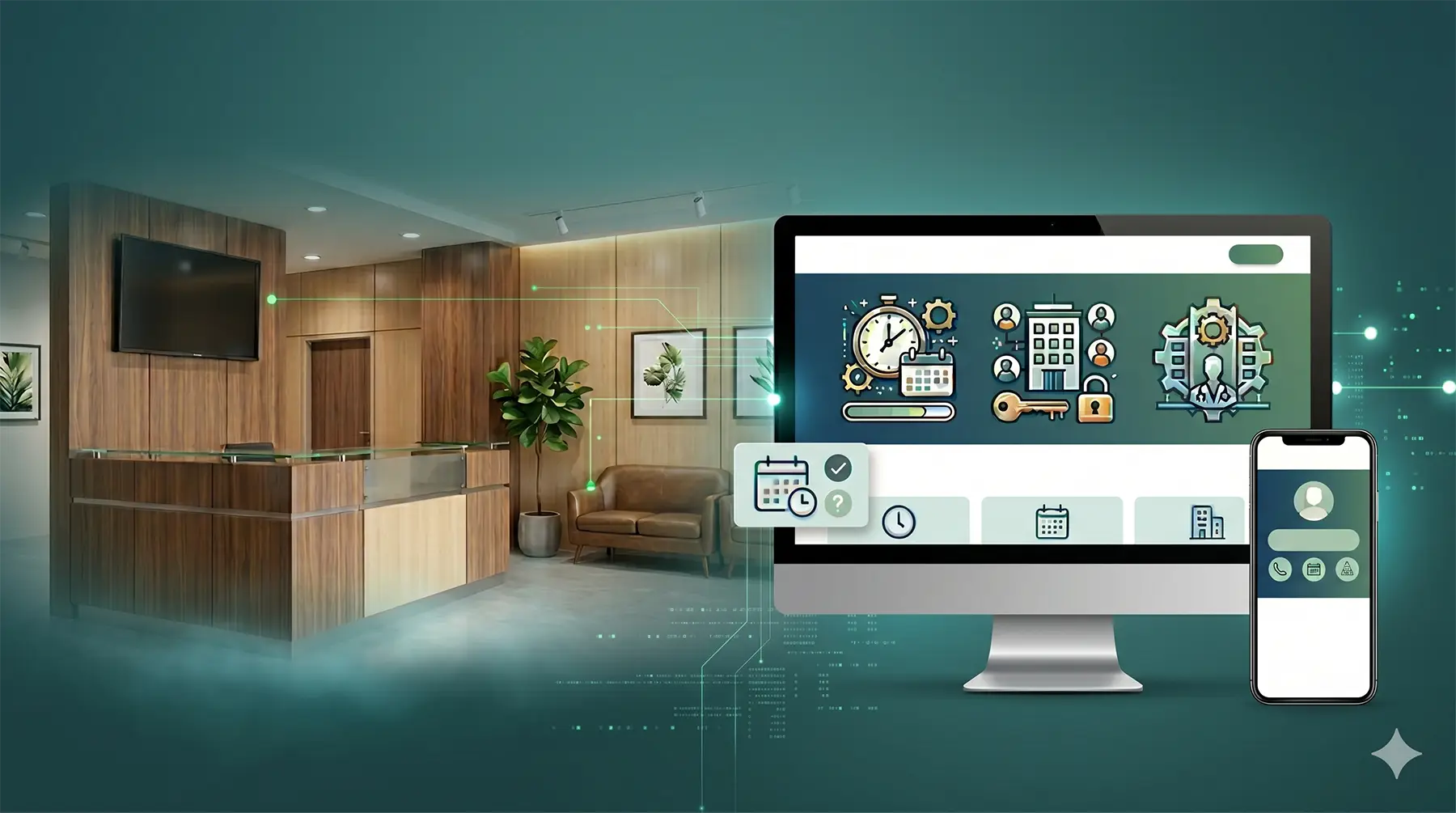
Treat Your Website Like Your Lobby
April 20, 2026Most business owners understand the value of maintaining their physical space. They notice when floors look tired, when the waiting room feels neglected, or when small maintenance issues start affecting the experience of patients, clients, or staff. Physical upkeep gets attention because it’s visible. It is tied directly to the reputation of the clinic.
Your website deserves that same level of attention. It shapes how people experience your business before they ever call or visit. It dictates whether a sick patient can find your hours in seconds or whether a major employer feels confident sending their injured workers to you. In both urgent care and occupational medicine, the website is often the first operational step into your business.
Digital friction is easier to miss
If a trash can is overflowing in your lobby, your team sees it immediately. But if a mobile form is buried or a page loads slowly, that problem sits there quietly. It creates a different kind of damage depending on which side of the business it hits.
In Urgent Care, the patient’s primary need is certainty. Whether it’s a parent with a crying child or an individual who feels so terrible they can barely focus, they are looking for a specific path to relief. They need to know two things immediately:
- Can you treat my specific condition?
- And when exactly can I be seen?
If the page loads slowly, or if there is no visible way to check wait times or book an appointment online, they won’t stick around to guess. They will look elsewhere for a clinic that provides a clear arrival time. They aren’t loyal to your brand yet; they are loyal to whoever provides the most certainty about when their pain will end.
In Occupational Medicine, the dynamic for new prospects is different. You are in a long sales cycle. These employers aren’t looking for a “quick fix” for a fever; they are evaluating a potential long-term partner for their workforce.
To move them, you need to show, not just tell. Seeing social proof (client logos, testimonials, or case studies that prove you understand their specific industry) is what puts you on their shortlist. Without that evidence of expertise, they are unlikely to break their current habits.
Structure for the long-term relationship
For your existing Occ Med clients, the website shouldn’t be a marketing brochure. It is a functional tool. These supervisors and HR managers are trying to complete a specific task in the middle of a busy workday.
They need a prominent, clear button that leads directly to the corporate client portal so they can pull results. They need a dedicated section that explains exactly how to get service, with forms and engagement tools that are impossible to miss.
When your site provides a clean, predictable structure for these tasks, it reinforces the relationship. When it makes them hunt for a login or a PDF, it creates “drag.” That drag compounds. Over time, an employer might get tired of the friction and start looking at competitors who make the administrative side of the job feel effortless.
Better alignment creates the advantage
The businesses that stand out are the ones with better structure and better flow. Many operators can launch a site, but fewer can keep improving it in a way that makes the business easier to work with.
Websites aren’t static assets. They support recruitment, intake, and day-to-day conversion points. They need maintenance, but they also need judgment about what to simplify and what to prioritize.
The operational ripple effect
The businesses that treat their website as a living operational tool build an advantage. They remove roadblocks sooner. They make it easier for patients to choose them and easier for employers to stay with them.
A website should help the business run. It should make the next step clearer, reduce avoidable drop-off, and support the real workflows that drive revenue and relationships. Once you start viewing it that way, website management stops feeling like a side task and starts looking like what it really is: an essential part of how the clinic runs.
Your Task for Today: Audit your top navigation paths to ensure both patients and employers can find what they need without avoidable friction. Open your website on your phone and try to perform two tasks:
- Find the “Next Available Appointment” or wait time in under three seconds.
- Locate the “Corporate Portal” button for existing employers.
If either requires hunting through menus, you have a friction problem that is actively draining your revenue. Reach out to learn more about how to align your website with your clinical operations.
© 2026 WebForDoctors | Payment Processing | Privacy Policy