Two Audiences, Two Playbooks: Why Your Urgent Care and Occ Med Marketing Can’t Be the Same
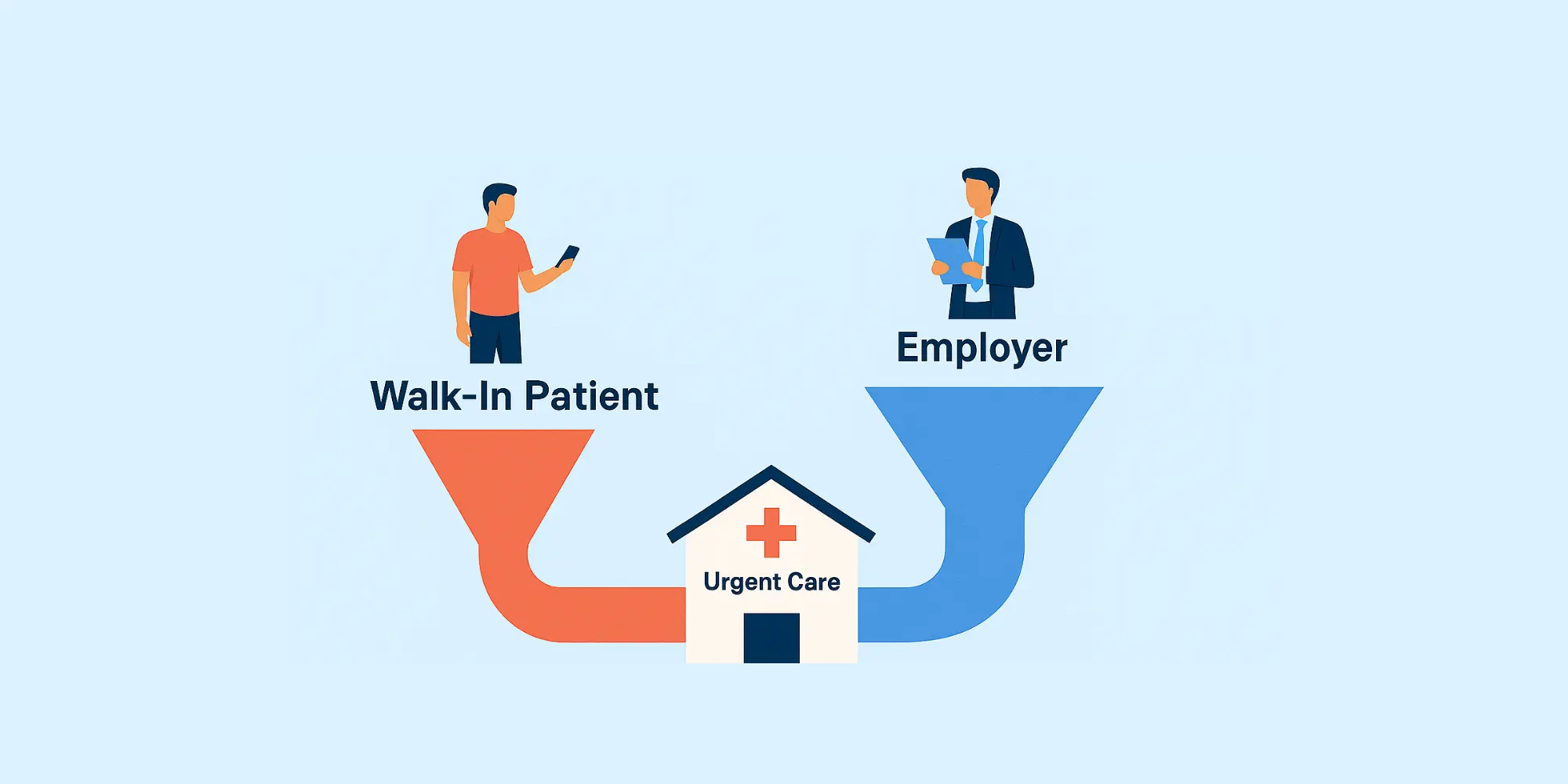
May 27, 2025If you run a hybrid urgent care and occupational medicine practice, you already know you serve two very different groups:
- Walk-in patients looking for fast, convenient care
- Employers looking for reliable injury management, compliance support, and communication
But when it comes to marketing, many practices try to use a single playbook for both, and that’s where things break down.
The audience, message, channel, and sales cycle are completely different. Trying to market to both with the same strategy guarantees that you’ll miss the mark with both.
Let’s look at why you need two distinct marketing funnels—and how to build them in a way that works together.
Audience #1: The Urgent Care Patient
Who they are:
Local consumers. Often searching online for immediate care. They may not know or care who you are until the moment they need help.
How they decide:
- Google search
- Reviews and reputation
- Website speed and clarity
- Online scheduling and wait times
What they care about:
- Speed, convenience, availability
- Insurance acceptance
- Cost transparency
- Clean, modern facilities
How to reach them:
- Local SEO
- Google Business Profile optimization
- Paid search (Google Ads)
- Positive online reviews
- Mobile-friendly website
- Community events and brand presence
Audience #2: The Employer
Who they are:
Business owners, HR managers, safety coordinators, risk and compliance officers.
How they decide:
- Referrals and reputation
- Sales rep or outreach communication
- Ability to meet compliance needs
- Responsiveness and reporting
- Relationship trust
What they care about:
- Return-to-work timelines
- Communication with HR/supervisors
- Drug testing capabilities
- OSHA recordkeeping and reporting
- Clear service agreements and pricing
How to reach them:
- B2B email outreach
- LinkedIn networking or paid ads
- Referral relationships (insurance brokers, TPAs)
- Educational lunch-and-learns or webinars
- Targeted landing pages for employer services
- Sales team follow-up and relationship-building
The Problem with a One-Size-Fits-All Marketing Approach
Here’s what happens when you try to market to both audiences with the same content or funnel:
- Your website confuses patients with too much B2B language—or leaves out Occ Med entirely.
- Your Google ads show employer-focused language to a consumer trying to book a flu shot.
- Your brand voice feels generic, unfocused, or “off” to both groups.
And worst of all: you lose trust and waste money.
How to Fix It: Build Two Funnels
The solution isn’t just about increasing your budget. It’s about increasing your clarity. Clarity makes every dollar work harder, whether your investment is modest or significant.
Create two parallel marketing playbooks:
| Funnel | Urgent Care | Occ Med |
|---|---|---|
| Audience | Walk-in patients | Employers |
| Primary Channels | Google, SEO, reviews, website | Email, LinkedIn, referral partners |
| Messaging Focus | Convenience, speed, affordability | Reliability, compliance, communication |
| Conversion Goal | Online appointment or visit | Sales meeting or employer agreement |
| Follow-up | Retargeting, email reminders | Sales process, onboarding sequence |
When both funnels are well-structured, you can grow both sides of your practice without diluting your message or overwhelming your team.
How They Support Each Other
Here’s the hidden opportunity most practices overlook:
Your two audiences don’t live in isolation. In fact, they often overlap, and the right marketing strategy can turn one audience into a bridge to the other.
For example:
- When you provide Occ Med services to an employer, their employees learn about your brand.
- Those employees may later choose your urgent care when they need a flu shot, injury care, or a school physical.
- You may gain dozens of loyal patients through the exposure.
Likewise:
- A great urgent care experience can turn a walk-in patient into a decision-maker’s recommendation for their company’s Occ Med program.
This isn’t accidental. It’s strategic.
When you segment your marketing but unify your brand experience, each side of the business can fuel the other.
Final Thought: One Brand, Two Voices
Your brand can be unified—but your messaging must be segmented. When you treat urgent care and Occ Med as two distinct customer journeys, your marketing becomes more precise, your results more predictable, and your practice easier to scale.
Don’t let a blended business model lead to a blended (and ineffective) strategy.
© 2026 WebForDoctors | Payment Processing | Privacy Policy